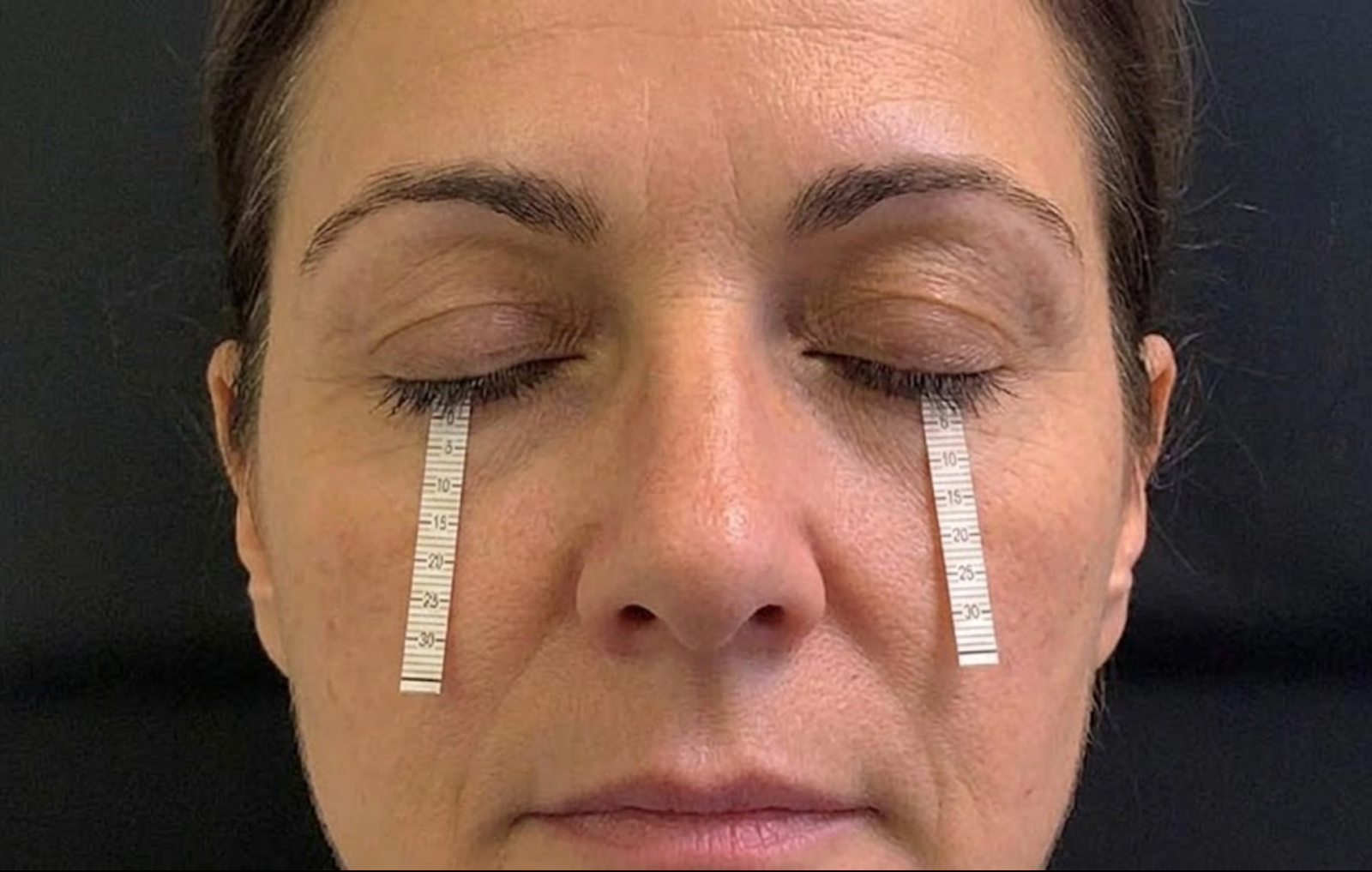
Understanding Tear Film Analysis: The Key to Ocular Comfort
For any patient considering contact lenses or experiencing “tired” eyes, a tear film analysis is perhaps the most critical part of an eye examination. While a standard refraction tells us how you see, the tear film analysis tells us how your eyes feel and how healthy they will remain throughout the day.
The tear film is a complex, three-layered liquid coating that protects the ocular surface. If any layer is deficient—whether in quantity or quality—you may experience burning, redness, and the inability to wear contacts comfortably.
The Three-Layered Architecture of Tears
To understand the tests, we must first understand the structure they are analyzing. The tear film consists of:

- The Lipid (Oil) Layer: The outermost layer produced by the meibomian glands. It prevents tear evaporation.
- The Aqueous (Water) Layer: The middle layer produced by the lacrimal glands. It hydrates the eye and washes away debris.
- The Mucin Layer: The innermost layer that “glues” the tears to the eye’s surface, ensuring they don’t simply slide off.
Key Clinical Tests in Tear Film Analysis
Your optometrist uses several specialized tests to evaluate these layers. Here is what you can expect during your appointment:
1. Tear Break-Up Time (TBUT)
This is the “gold standard” for measuring tear stability. It determines how long your tears stay on your eye before they begin to evaporate or “break up.”
- The Procedure: A small amount of fluorescein dye is placed in the eye. You are asked to blink and then keep your eyes open. Under a cobalt blue light, the doctor watches for the first dark spot to appear in the green glow.
- Results: A normal TBUT is 10 seconds or longer. If your tears break up in less than 10 seconds, it indicates an unstable tear film, often caused by a poor lipid layer.
2. Non-Invasive Tear Break-Up Time (NIBUT)
For patients sensitive to drops, the NIBUT offers a more natural measurement.
- The Procedure: A machine projects a grid or rings (Placido rings) onto the surface of your eye. The doctor monitors the grid for any distortion.
- Advantage: Because no dyes are added, this test measures your “true” tear stability without the influence of artificial drops.
3. Schirmer Test
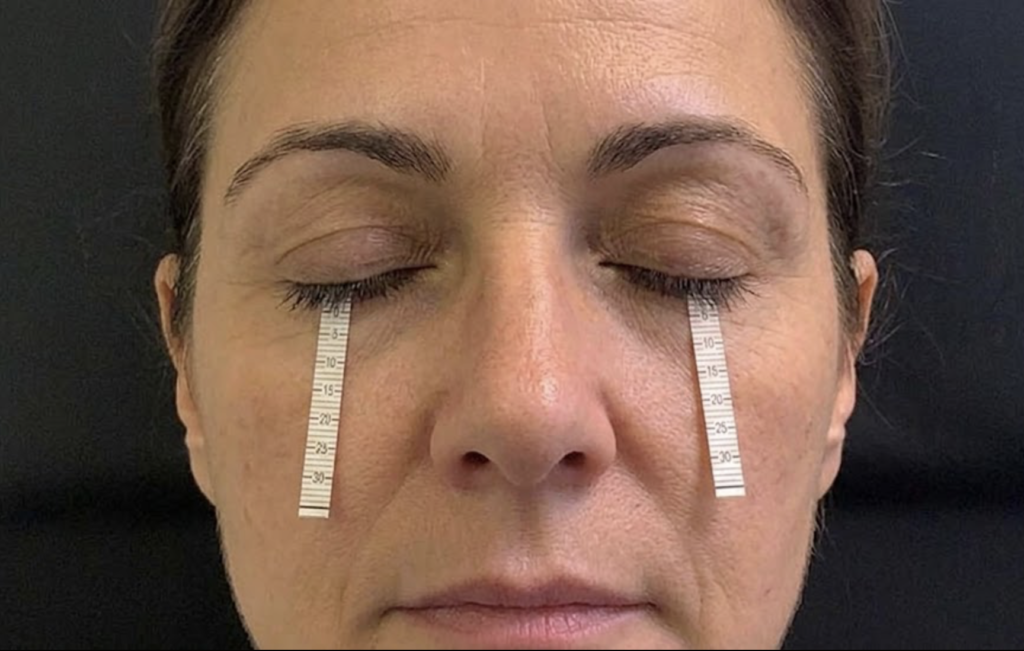
This test measures the quantity of tears your eyes produce.
- The Procedure: A tiny, specialized strip of filter paper is placed inside your lower eyelid. You close your eyes for five minutes.
- Results: If more than 10mm of the paper is wet, your tear production is normal. Less than 5mm is a clear indicator of dry eye syndrome (aqueous deficiency).
4. Phenol Red Thread (PRT) Test
A faster, more comfortable alternative to the Schirmer test.
- The Procedure: A thin, pH-sensitive thread is placed over the lower eyelid for only 15 seconds. The thread turns red as it absorbs tears.
- Why patients like it: It is much faster than the Schirmer test and rarely requires numbing drops.
Comparison: Tear Quality vs. Quantity Tests
| Test Name | What it Measures | Normal Value | Best For… |
| TBUT / NIBUT | Tear Stability (Quality) | > 10 Seconds | Evaporative Dry Eye / Contact Lenses |
| Schirmer Test | Tear Volume (Quantity) | > 10 mm | Severe Dry Eye Diagnosis |
| Phenol Red Thread | Tear Volume (Quantity) | > 9 mm | Fast screening for volume |
| Tear Meniscus Height | Tear Reservoir | ~ 0.2 mm | Quick slit-lamp volume check |
Why Analysis is Essential for Contact Lens Wearers
When you wear a contact lens, it “splits” your tear film in two. There are tears under the lens and tears on top of the lens. If your tear film analysis shows high evaporation or low volume:
- The lens will dry out: Causing it to tighten on the eye, leading to redness.
- Deposits will form: Proteins and lipids will stick to the lens, causing blurry vision.
- End-of-day fatigue: You will find yourself wanting to take your lenses out by 3:00 PM.
By performing a comprehensive tear film analysis, your optometrist can prescribe specific lens materials—like Bausch + Lomb ULTRA® or Acuvue® Oasys—that are chemically engineered to help your specific tear profile stay stable.
Final Thought
Don’t ignore the “scratchy” feeling in your eyes. A professional tear film analysis is a painless, 15-minute process that can be the difference between daily discomfort and the freedom of clear, healthy vision.
Expert Note: If you are over age 40 or work in a screen-heavy office environment, you are at a higher risk for tear film instability. Ensure a tear analysis is part of your annual eye check-up.
Discover more from An Eye Care Blog
Subscribe to get the latest posts sent to your email.
You must be logged in to post a comment.