The Ultimate Guide: Eye Test and Contact Lens Test
If you are looking to ditch your glasses for the freedom of contact lenses, you might be surprised to find that a standard eye exam isn’t the final step. While a regular eye test checks your health and your vision for glasses, a contact lens test (fitting) is a specialized medical procedure required to ensure a lens can safely sit on your eye.
Here is a step-by-step breakdown of exactly what happens during a contact lens fitting and what you, as a patient, can expect from the process.
1. The Pre-Fitting: Beyond the Prescription
The most common mistake patients make is assuming their glasses prescription is the same as their contact lens prescription. Because glasses sit about 12mm away from your eye and contacts sit directly on it, the power often changes.

During the initial phase, your optometrist will perform:
- Vertex Distance Calculation: Adjusting the power based on the lens’s proximity to the eye.
- Tear Film Analysis: Assessing the quantity and quality of your tears. If your eyes are dry, you may need a specific material like a Silicone Hydrogel to prevent discomfort.
2. Corneal Mapping (Topography)
Just as no two fingerprints are the same, no two corneas have the same shape. To find a lens that fits, we must measure the “hills and valleys” of your eye’s surface.
- What to expect: You will look into a machine (a keratometer or topographer) that projects rings of light onto your eye. This non-invasive test measures the curvature of your cornea.
- Why it matters: If a lens is too steep, it will suffocate the eye; if it is too flat, it will slide around and cause blurry vision.
3. The Diagnostic Lens Fitting
Once the measurements are taken, your optometrist will select a “diagnostic” or trial lens. This is the “test drive” phase of your fitting.
- What to expect: The doctor will place the lenses on your eyes. You will be asked to sit in the waiting room for about 10–15 minutes. This allows the lenses to “settle” and equilibrate with your natural tear film.
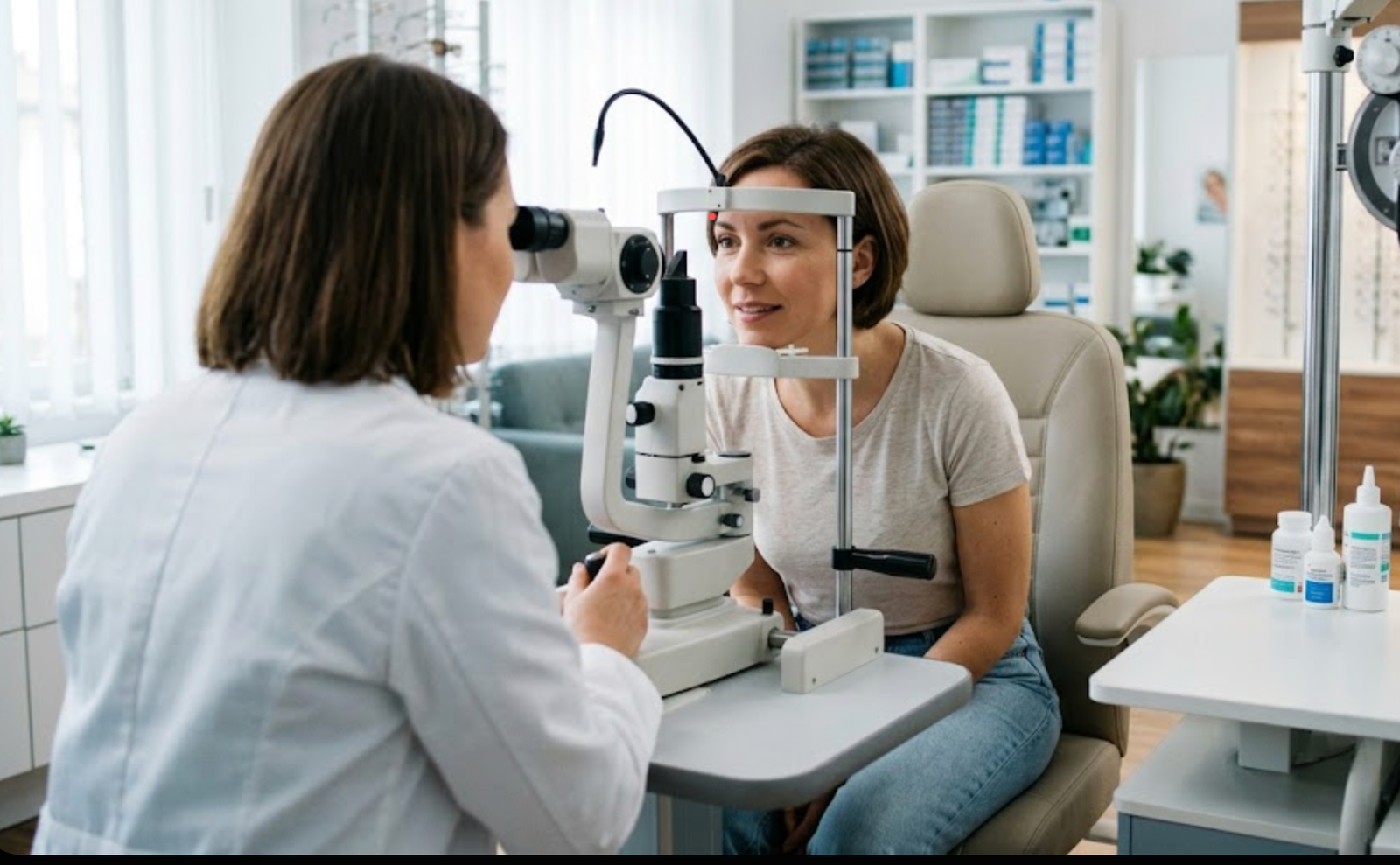
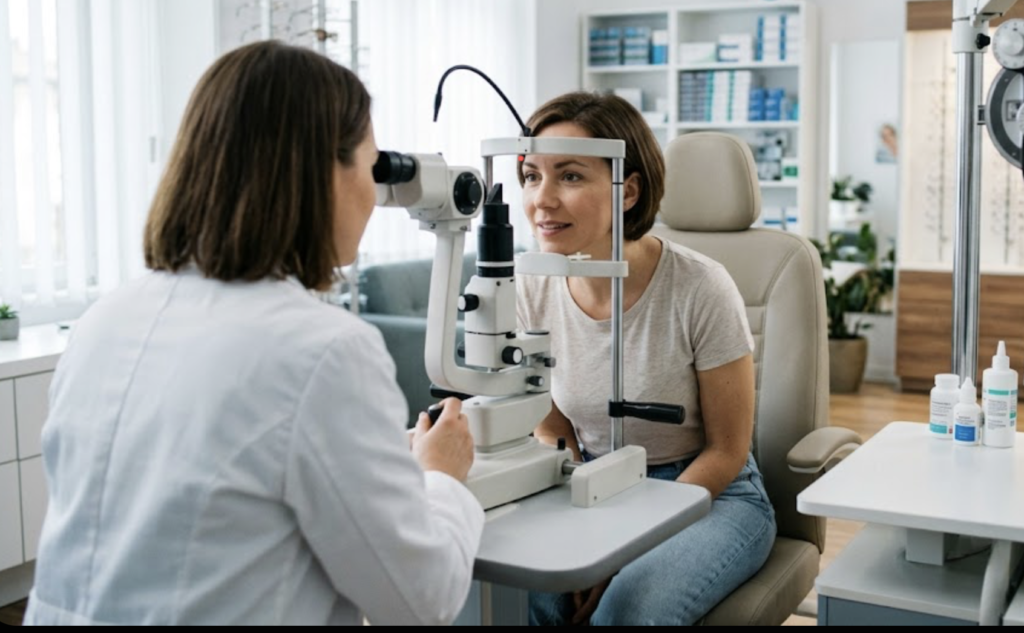
- The Evaluation: Your doctor will then use a slit-lamp microscope to check the fit. They are looking for:
- Centration: Does the lens stay centered over your pupil?
- Movement: Does the lens move slightly (0.5mm to 1mm) when you blink? This movement is vital for allowing oxygen and fresh tears to reach the eye.
4. Insertion and Removal Training (I&R)
If you are a first-time wearer, this is often the most nervous part of the visit. But don’t worry—it’s all about technique.
- What to expect: A technician or the doctor will sit with you to teach you how to safely put the lenses in and take them out.
- The Goal: You won’t be allowed to take the trial lenses home until you can demonstrate that you can remove them safely on your own.
5. The Trial Period: Real-World Testing
A contact lens test isn’t finished when you leave the office. You will usually be given a 5-to-7-day supply of trial lenses to wear in your normal environment.
- Expectations: During this week, pay attention to how your eyes feel after 8 hours of computer work or while driving at night.
- Follow-up: You will return for a quick follow-up visit. If the fit is perfect and the vision is sharp, your doctor will finalize and sign your Contact Lens Prescription.
Summary: Why You Need Both
A standard eye test ensures your eyes are healthy and you can see; the contact lens test ensures you can wear contacts without causing long-term damage like corneal scarring or infections.
By investing in a proper fitting, you aren’t just buying clear vision—you are protecting the health of your eyes for the future.
References
- American Optometric Association (AOA): Comprehensive Eye and Vision Examination and Contact Lens Fitting.
- Clinical Ophthalmology Journal: The Impact of Proper Corneal Alignment on Long-term Contact Lens Success.
Discover more from An Eye Care Blog
Subscribe to get the latest posts sent to your email.

You must be logged in to post a comment.